← Back to Projects

Carotid Artery Cardiac Output Monitor

I developed the electrical and mechanical systems for a wearable continuous cardiac output monitor, combining Doppler ultrasound and arterial applanation tonometry on a single neck-worn device, with FEA-validated pressure estimation under 5% error.
PCB Design (KiCAD) Doppler Ultrasound Applanation Tonometry ANSYS Static Studies Fusion360 Arduino / Embedded C Rapid Prototyping Verification Testing Technical Leadership
Situation

  • Develop the initial operational sensors with necessary mechanical fixtures for verification testing.
  • Create the basis for a research project exploring the feasibility of a wearable cardiac output device for Dr. Yi-Xian Qin's laboratory.
  • Conduct basic verification testing and collect an operational dataset.

Outcomes

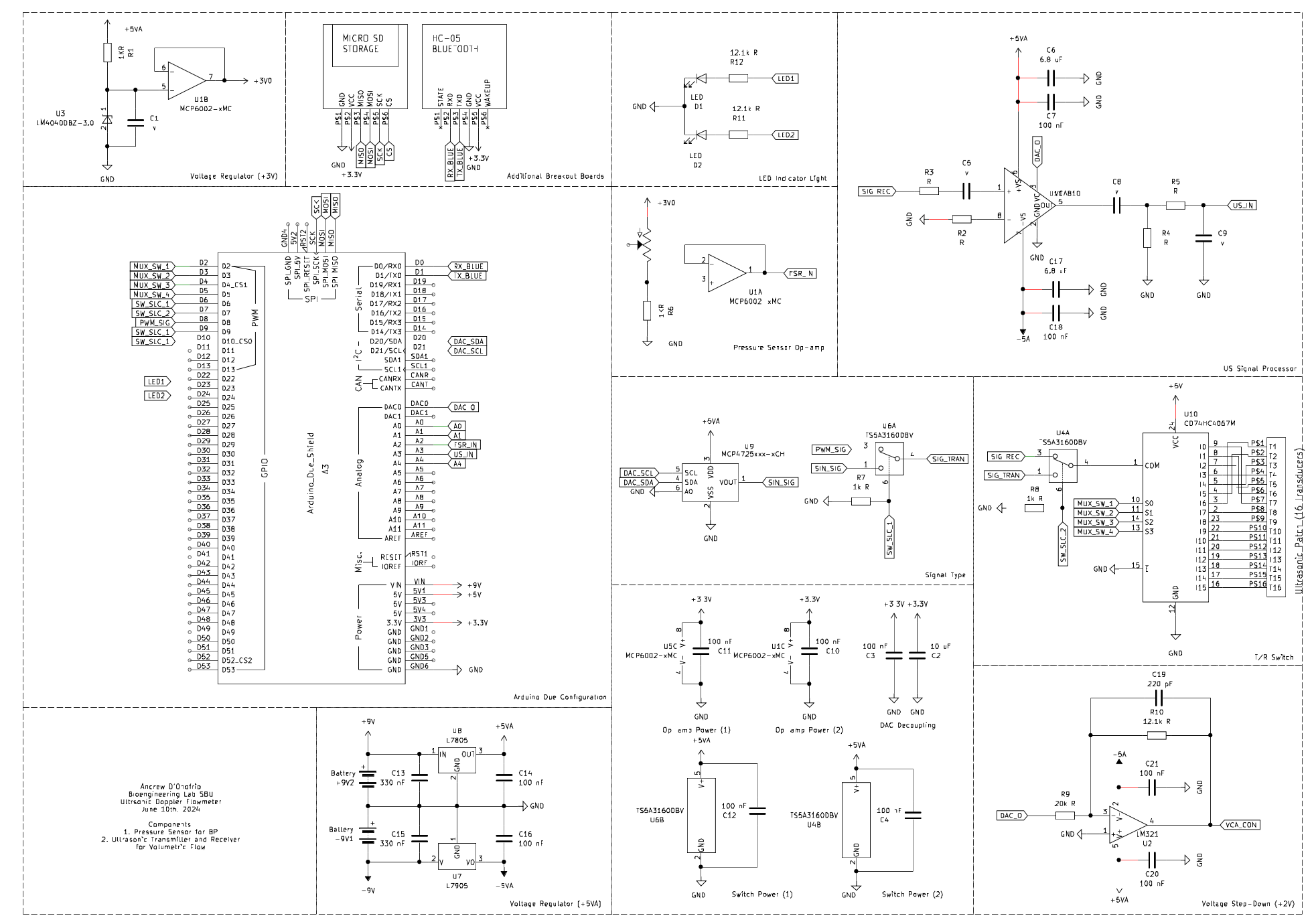
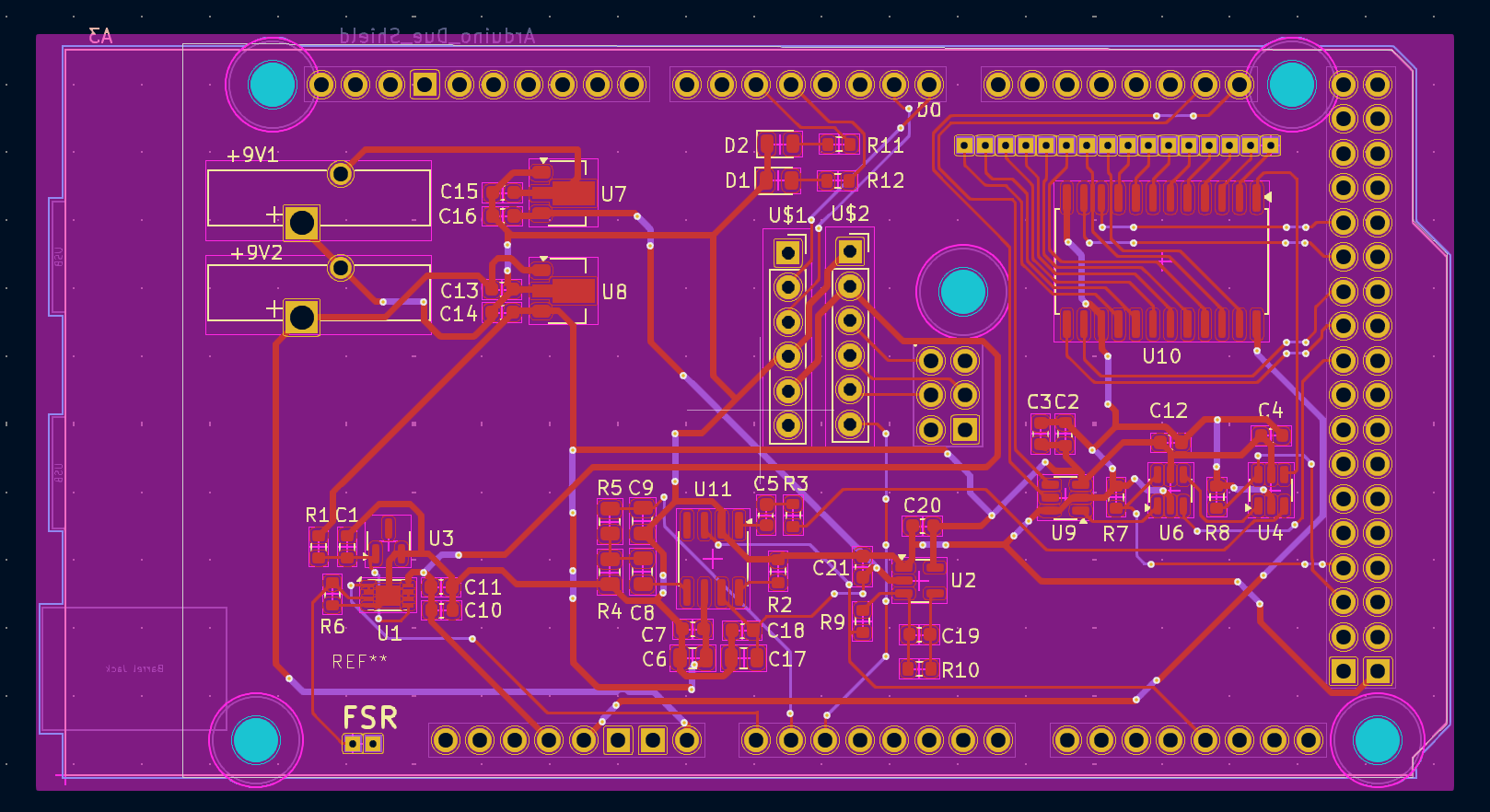
  • Developed Arduino-based electrical control systems through KiCAD schematics and a 2-layer PCB for both ultrasound and pressure sensors.
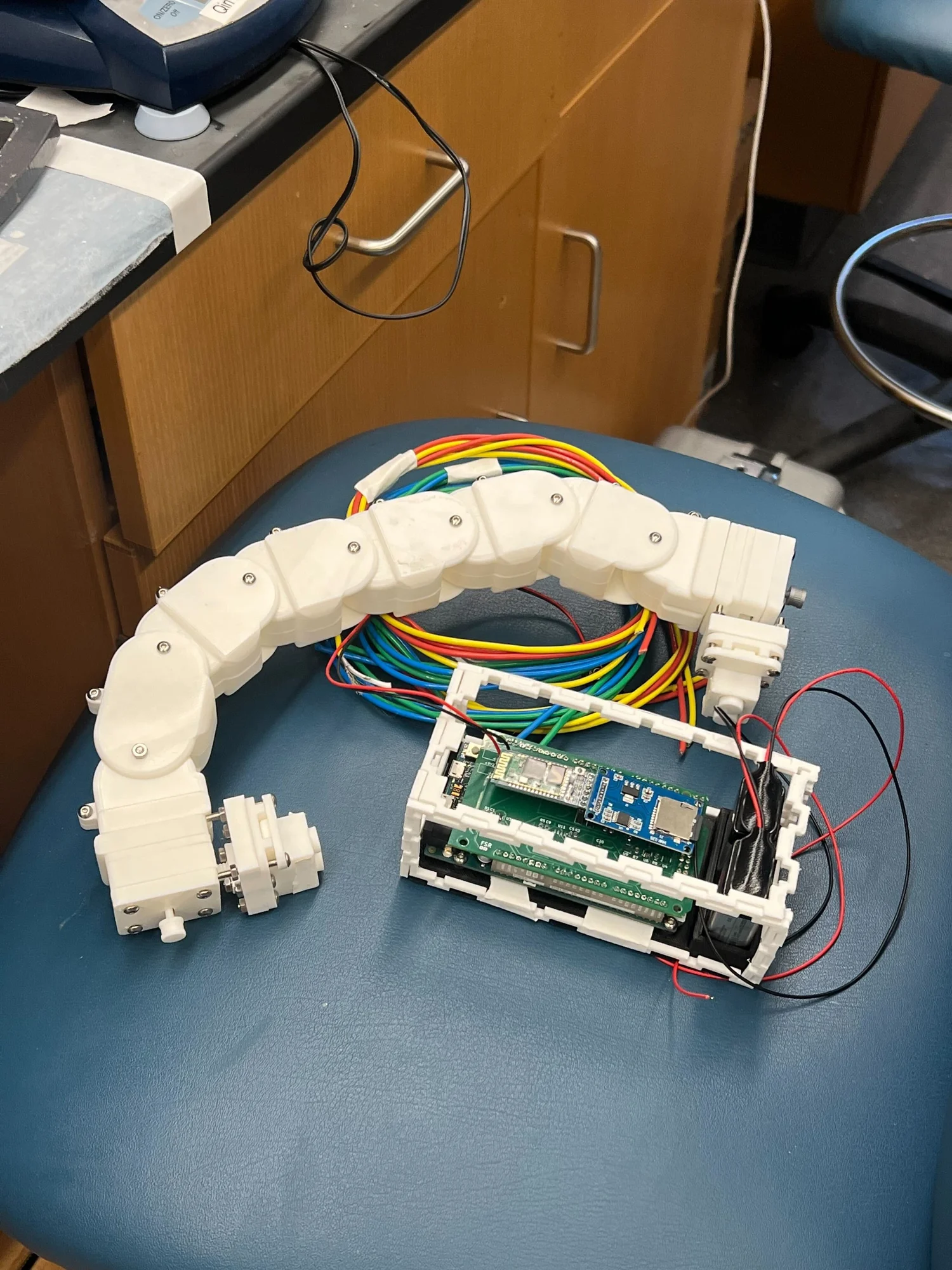
  • Iterated 3 mechanical prototype generations with 50+ PLA components in Fusion360 to fixture sensors and provide modular adjustment across neck sizes.
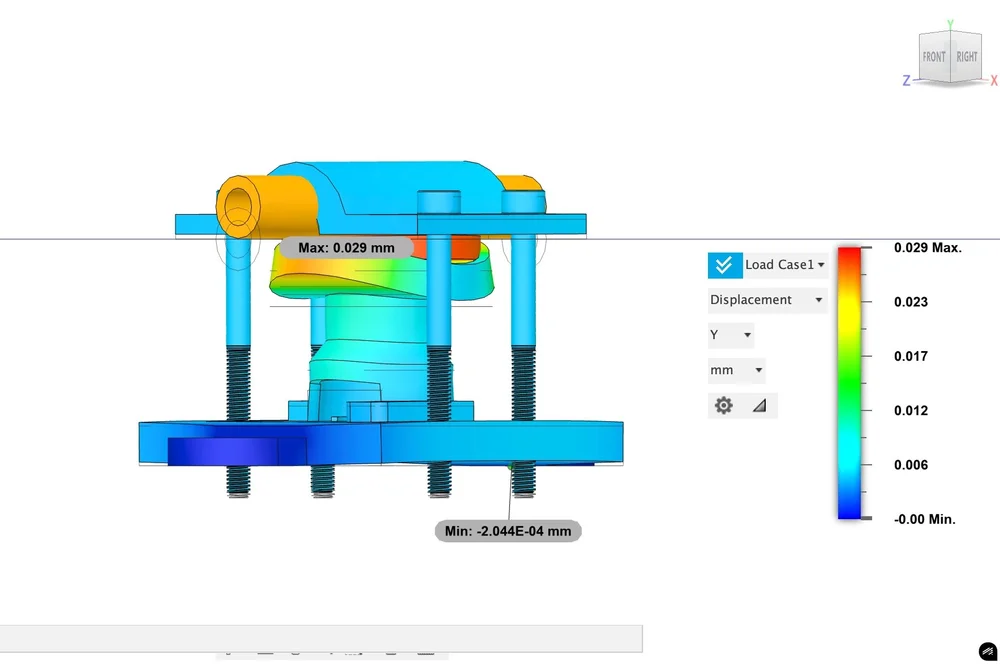
  • Formulated carotid artery FEA in ANSYS for applanation tonometry to estimate arterial deformation and pressure with <5% error.

The Problem

Severe and sudden myocardial infarction prevails for patients recovering from cardiac surgeries or living with recurrent cardiovascular events, with mortality nearly doubling for patients suffering a second infarction within a five-year recovery window. Reliable diagnostic technology already exists in emergency-care centers and hospitals, but almost none of it is realistic for a patient to use at home, continuously, between appointments.

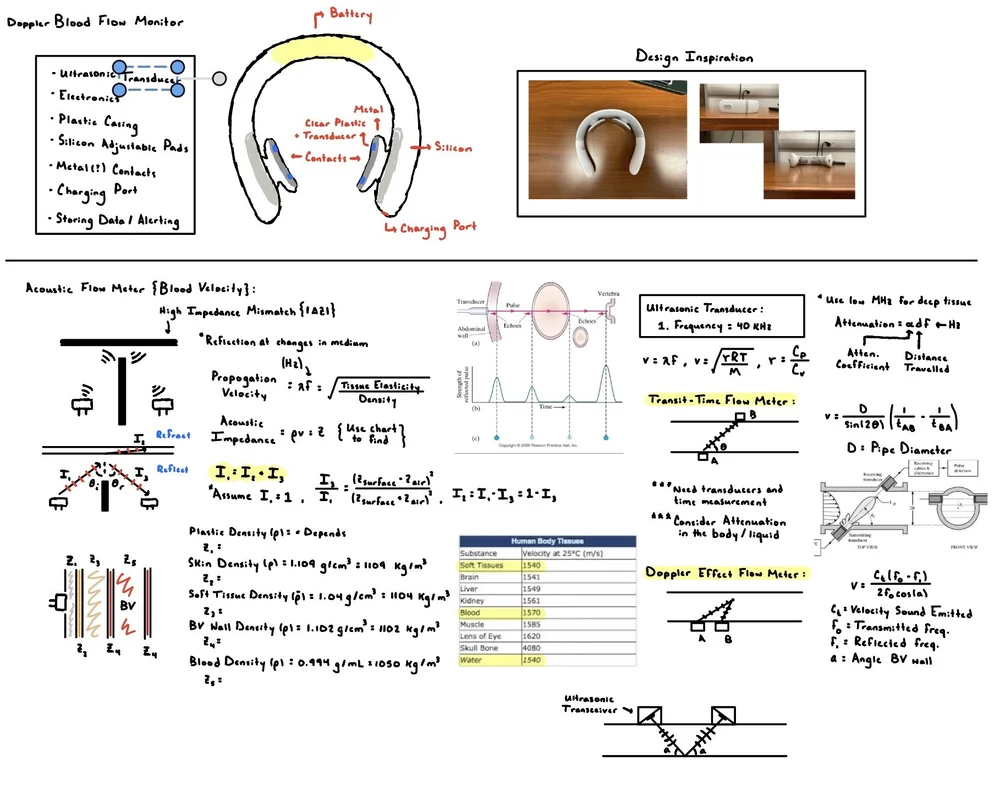
Recent developments in wearable and flexible ultrasonic transducers from MIT and UC San Diego made a different approach look feasible: translating Doppler shift flowmeter technology, normally a piece of hospital equipment, into something a patient could wear continuously at home.

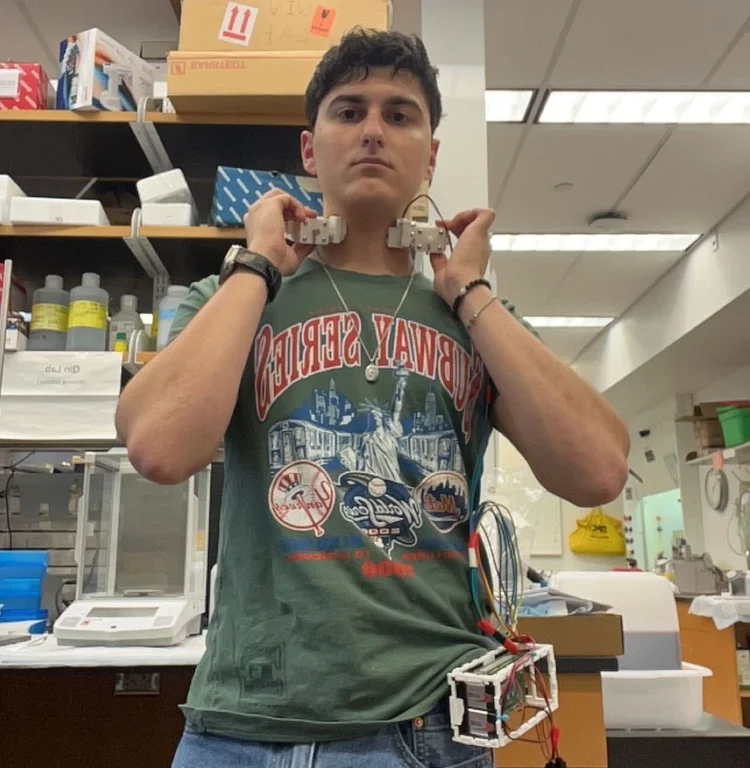
CACOM is designed to rest on the patient's neck and continuously record average blood flow through the carotid artery alongside arterial stiffness, accessible to both doctors and patients over Bluetooth. Combining Doppler ultrasound with arterial applanation tonometry on one wearable device opens a path to personalized, continuous cardiac output monitoring for patients with chronic cardiovascular disease or recovering from a cardiac event.

Background context for the CACOM cardiac monitoring project

At-home cardiac monitoring remains largely inaccessible despite reliable diagnostic technology existing in hospitals and emergency-care centers

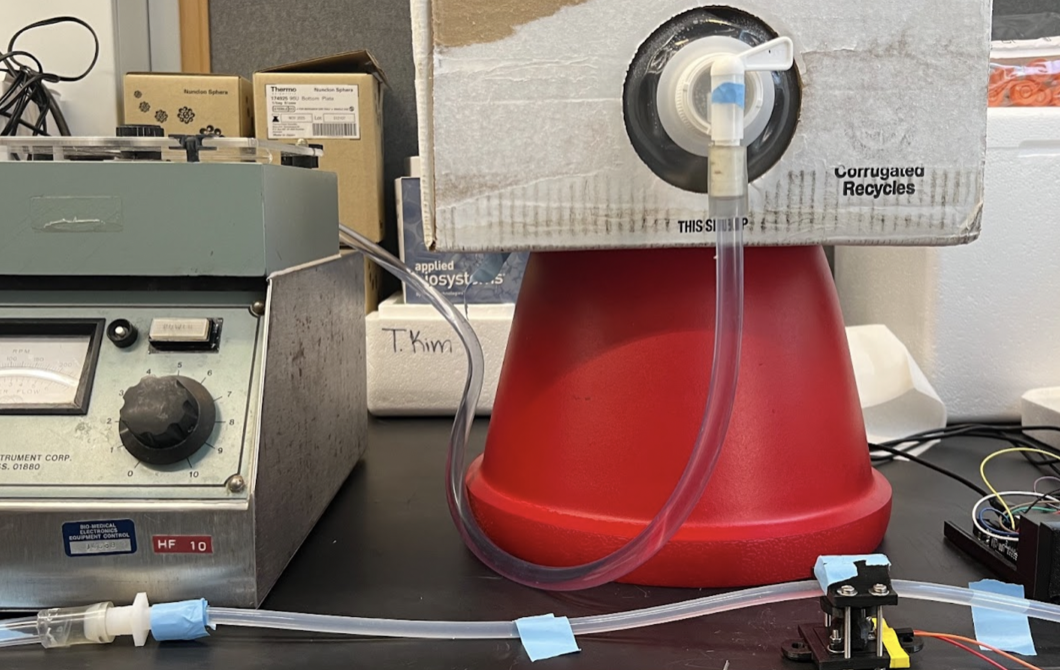
The device runs two sensing methods in parallel. Arterial applanation tonometry estimates blood pressure and arterial stiffness through semi-occlusion, the right approach here given the device is worn continuously and the sensor sits directly over the artery. I designed all of the applanation components in Fusion360, then ran ANSYS static studies to estimate the applanation area against the spring deformation and elastic properties of the vinyl pipe used in the sensor housing, verified separately against a rotary pump and flow rate sensor rig.

The second sensor is Doppler ultrasound for volumetric blood flow. A microcontroller drives the signal pulse rate and a coded sine wave generator emits a controllable-amplitude, controllable-frequency signal through the ultrasonic patch. A transmitter/receiver switch flips the patch between modes, the received signal runs through amplifiers and filters, and a PWM analog pin feeds an Arduino FFT routine that computes instantaneous blood velocity from the returned signal. I verified the FFT output two ways: a separate Python Fourier transform on the same signal, and a hand calculation, before trusting the onboard result.

ANSYS static study estimating applanation area from spring deformation

ANSYS static study: applanation area from spring deformation and vinyl pipe elastic properties

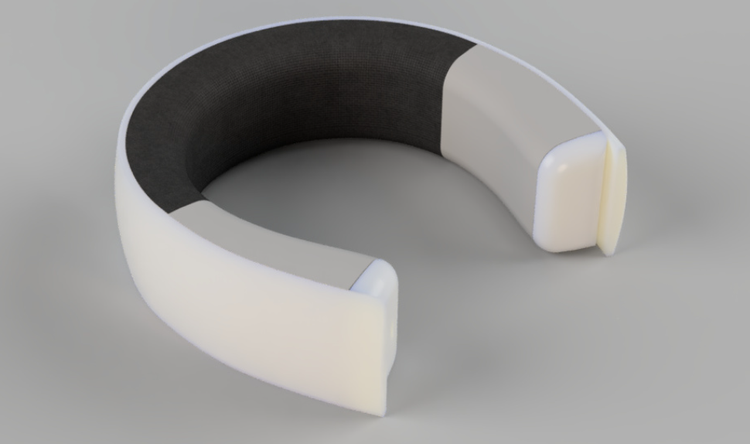
V1.0

Form Factor

Modeled off a basic neck massager to establish component and sensor placement. Suggested silicone and injection-molded ABS, with early articulation concepts for fitting the device to the neck.

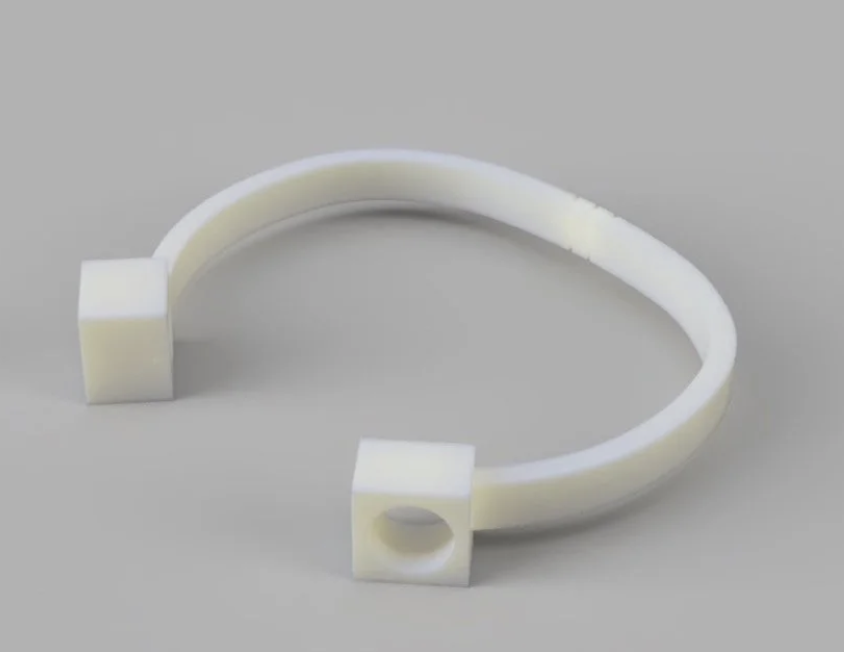
V2.0

Working Prototype

Simplest functional form, with a living hinge at the back support for clamping onto the neck. Case testing surfaced the real problems: no modularity across neck sizes, inconsistent sensor positioning over the carotid artery, and not enough rigidity to hold position.

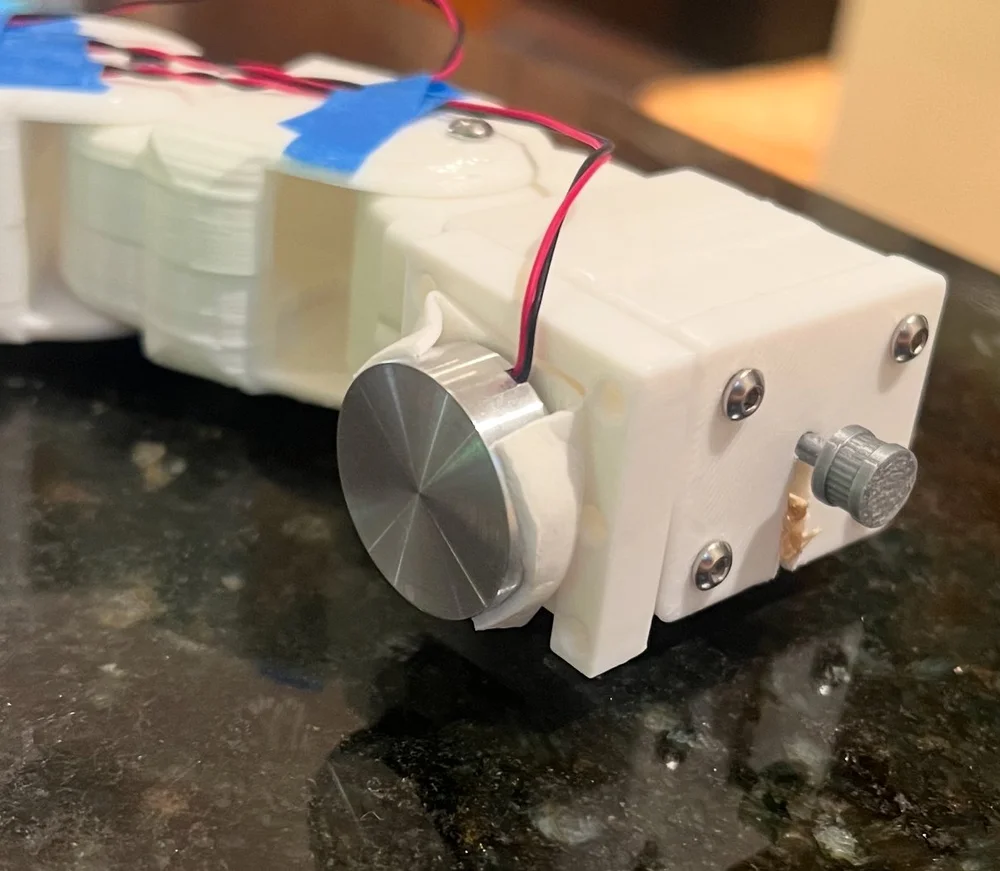
V3.0

Final Design

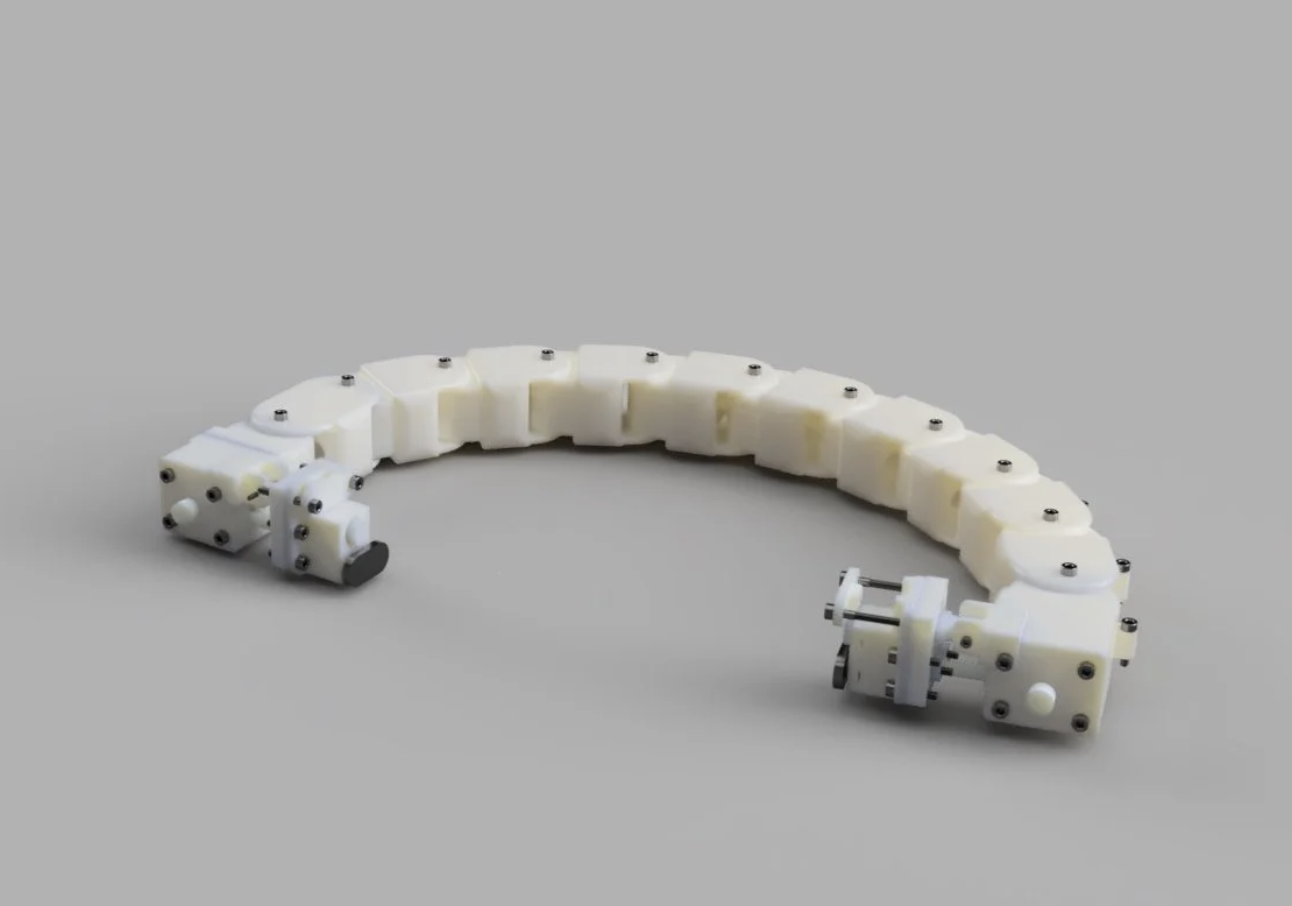
A full overhaul addressing every V2.0 issue: detailed neck links for modular adjustment across neck sizes, a rack-and-pinion gear system to engage the sensors consistently, and multiple articulating parts for ongoing fit adjustment.

Across the three generations, the team iterated 50+ individual PLA components in Fusion360, mostly fixturing for the ultrasound and pressure sensors and the adjustment hardware that lets the device fit a range of neck sizes without a custom mold per patient. The jump from V2.0 to V3.0 was the real engineering shift: V2.0 proved the sensors could work on a static bench rig, but the rack-and-pinion and modular neck links in V3.0 are what made consistent sensor-to-artery positioning possible on a moving patient, not just a test fixture.

SensingDoppler ultrasound · applanation tonometry
MicrocontrollerArduino-based
PCB2-layer, KiCAD
ConnectivityBluetooth
Mechanical iterations3 generations (V1.0–V3.0)
Component count50+ PLA parts, Fusion360
AdjustmentModular neck links, rack-and-pinion
FEA validation<5% error, applanation deformation

Electrical

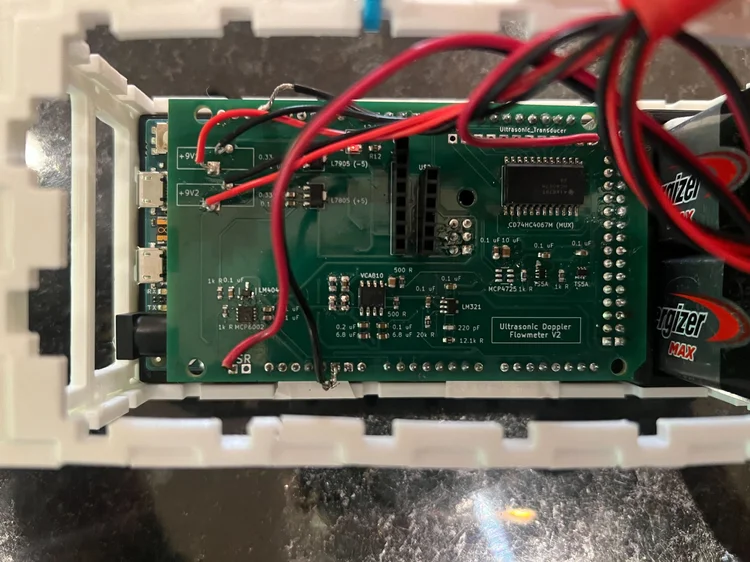
I designed the electrical control systems in KiCAD: schematics and a 2-layer PCB driving both the ultrasound and pressure sensors from a single Arduino-based board. The schematic went through two real revisions, V1 established the core signal path between the sine wave generator, the transmitter/receiver switch, and the amplification and filtering stage; V2 cleaned up the layout and reworked the analog front end as the sensor requirements firmed up.

Keeping both sensor types on one board mattered for the mechanical side too: the V3.0 enclosure was designed around this PCB's actual footprint, not the other way around, which is part of why the rack-and-pinion sensor engagement could stay this compact.

The applanation tonometry model was validated computationally and physically. ANSYS static studies estimated arterial deformation and pressure from the sensor's spring and vinyl pipe properties, then that estimate was checked against a rotary pump and flow rate sensor rig built specifically for verification, not against the actual sensor output alone. The ultrasonic sensing path was validated by comparing the onboard Arduino FFT against an independent Python Fourier transform and a hand calculation of the transmitted wave, confirming the microcontroller's signal processing matched expected behavior before trusting it for live data collection.

CACOM verification test rig: rotary pump and flow rate sensor setup

Verification rig: rotary pump and flow rate sensor, used to check the applanation tonometry estimate against physical test data

<5%
FEA error, applanation deformation estimate
3
Mechanical prototype generations
50+
PLA components iterated

This project's deliverable wasn't a finished product, it was the case for whether a wearable cardiac output monitor combining these two sensing methods was even feasible. That meant the documentation mattered as much as the hardware: a verified electrical design with two schematic revisions, three mechanical generations with the engineering rationale behind each redesign, and an FEA model checked against physical test data rather than left as a simulation alone.

I authored the verification record and the final report and presentation materials that the lab uses to evaluate whether this research direction is worth continuing, the same documents below. That's the actual output of a feasibility study: not a product launch, but a record solid enough that the next person picking this up doesn't have to start over.