MAE 4340 · Cornell University · 7-person Team (Member)
I led design, manufacturing, and simulation across three prototype generations of a closet-mounted clothes dryer, from cardboard form-factor testing to an ANSYS Fluent-validated final design, presented to an investor panel for MAE 4341.
Situation
Outcomes
The Problem
MAE 4341, Innovative Product Design via Digital Manufacturing, tasked our team with innovating a new physical product for Cornell college students to improve some part of their day-to-day experience. We collected 150+ empathy fieldwork data points through customer interviews and immersion programs to learn about students' daily routines before settling on a direction.
Laundry drying came up consistently as a friction point, students without in-unit dryers were stuck waiting on shared laundry room equipment, often for an hour or more, just to get clothes dry. We set out to build a device that would improve the clothes-drying experience independent of college or apartment drying equipment entirely, something that could mount directly in a closet.
The constraint that shaped everything downstream: it had to be realistic for an actual student to buy and use, not a lab demo. That meant real verification and validation testing, a functional prototype, and a market case that would hold up in front of an investor panel, not just course staff.
Customer discovery: 150+ empathy fieldwork data points collected before settling on laundry drying as the problem space
I led design and manufacturing of components across every prototype iteration, plus the simulation and testing work behind them. Beyond building, I integrated TRIZ (Theory of Inventive Problem Solving) at each design stage: a systematic method for identifying contradictions between competing engineering requirements and resolving them deliberately, rather than guessing at a redesign.
Each prototype generation had its own dominant contradiction. V0 needed to be lightweight and minimally sized, which favored a flimsy material; V1 needed enough structural length and airflow volume to actually dry clothes, which fought against portability; V2 needed higher fan output without sacrificing the durability or simplicity we'd already locked in. TRIZ gave the team a shared vocabulary for naming those tradeoffs instead of re-litigating them from scratch at every meeting.
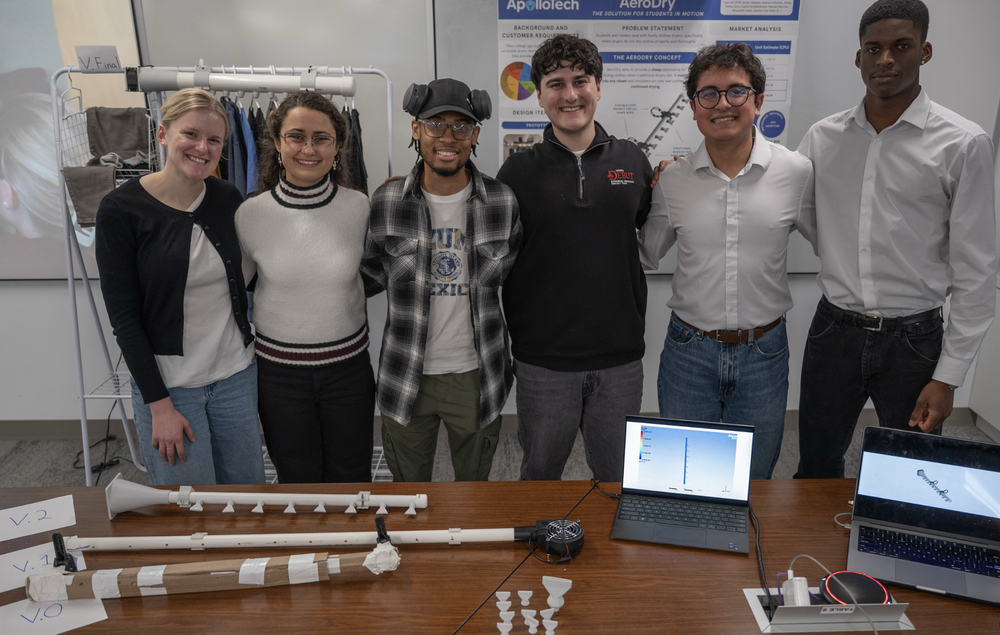
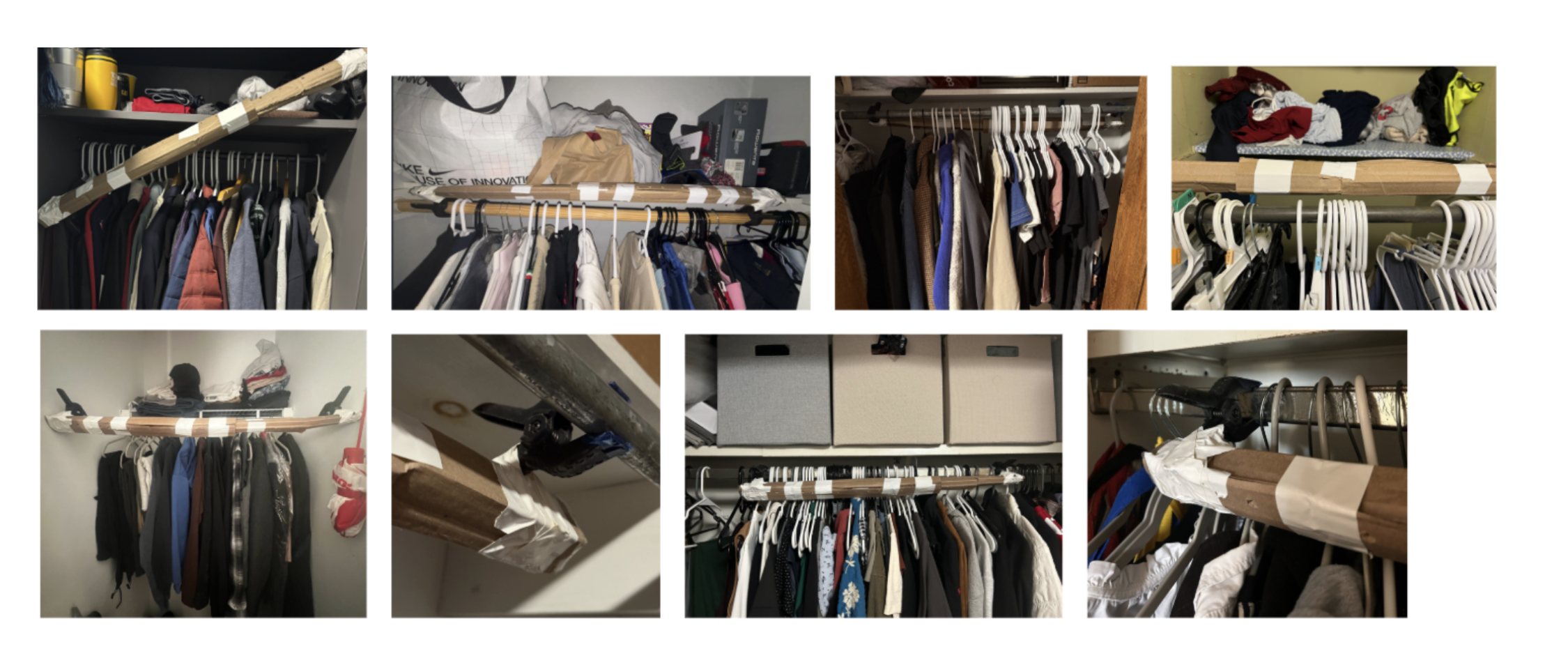
Cardboard, telescoping, minimally sized. Tested fit and aesthetics against the TRIZ form parameters: weight, length, and volume of a stationary object. Lightweight, but the team flagged early that cardboard would directly contradict the manufacturability and durability requirements coming next.
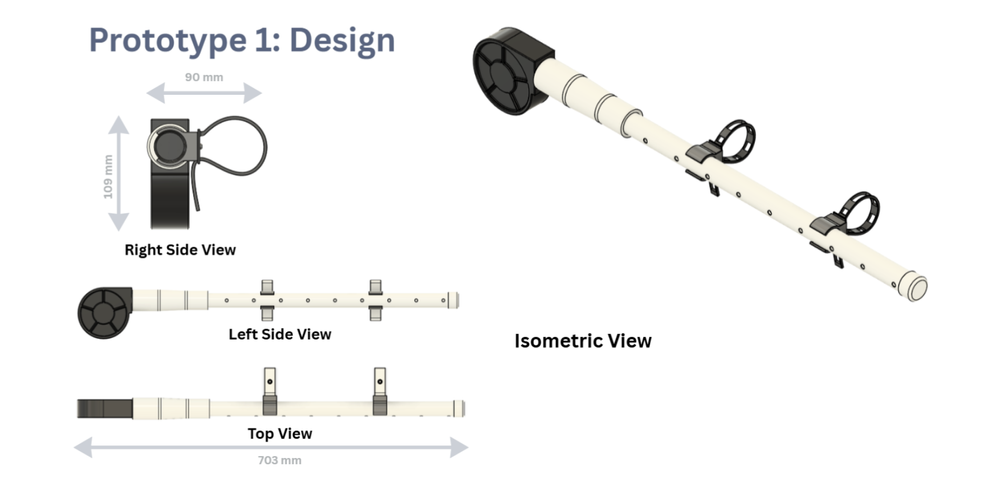
A low-speed centrifugal fan into a schedule-40 PVC tube body with 8 open 1/4-inch holes. Proved airflow was possible, but balancing tube length and volume against fan power and durability was the dominant contradiction, and the open-hole design wasted velocity.
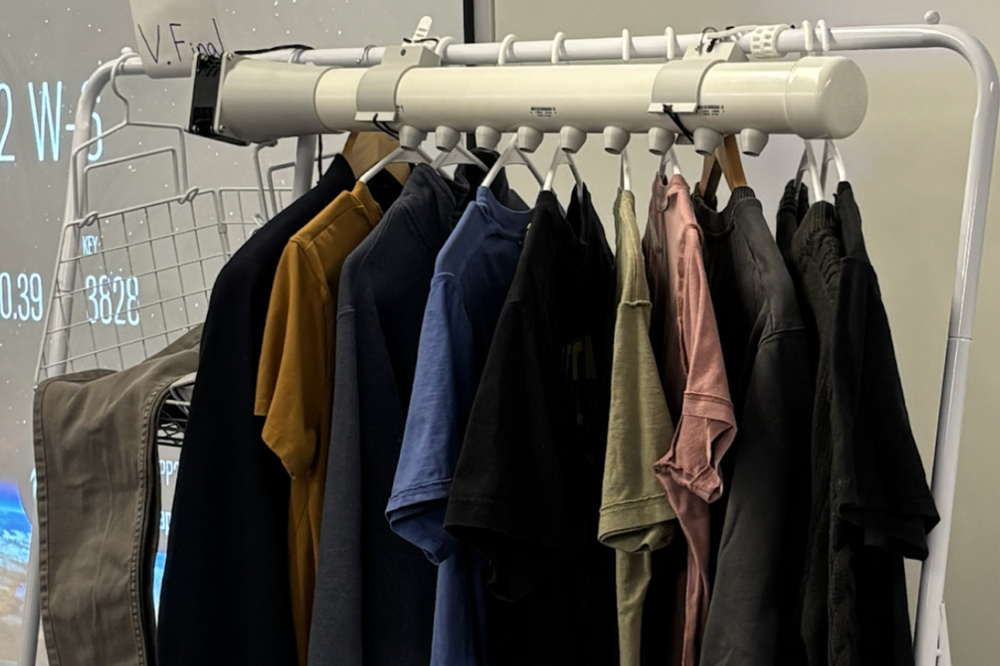
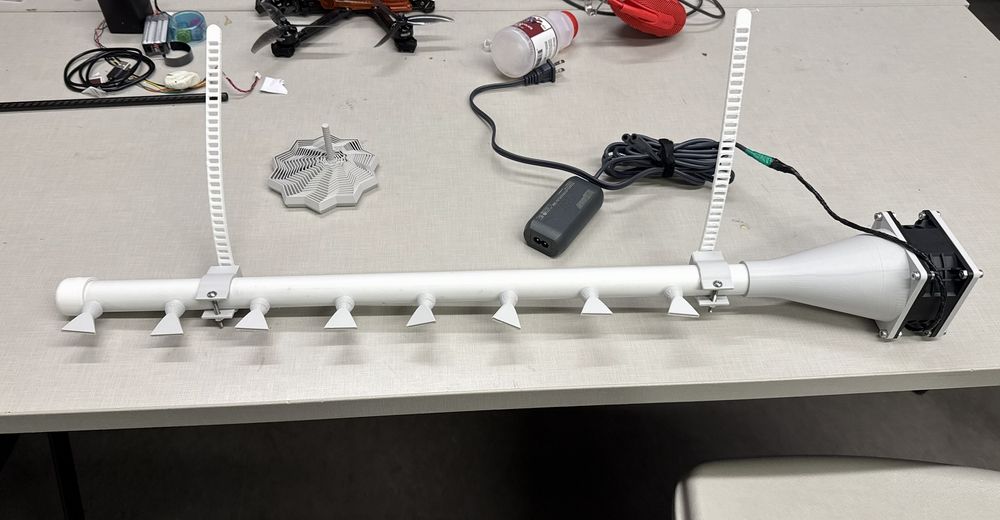
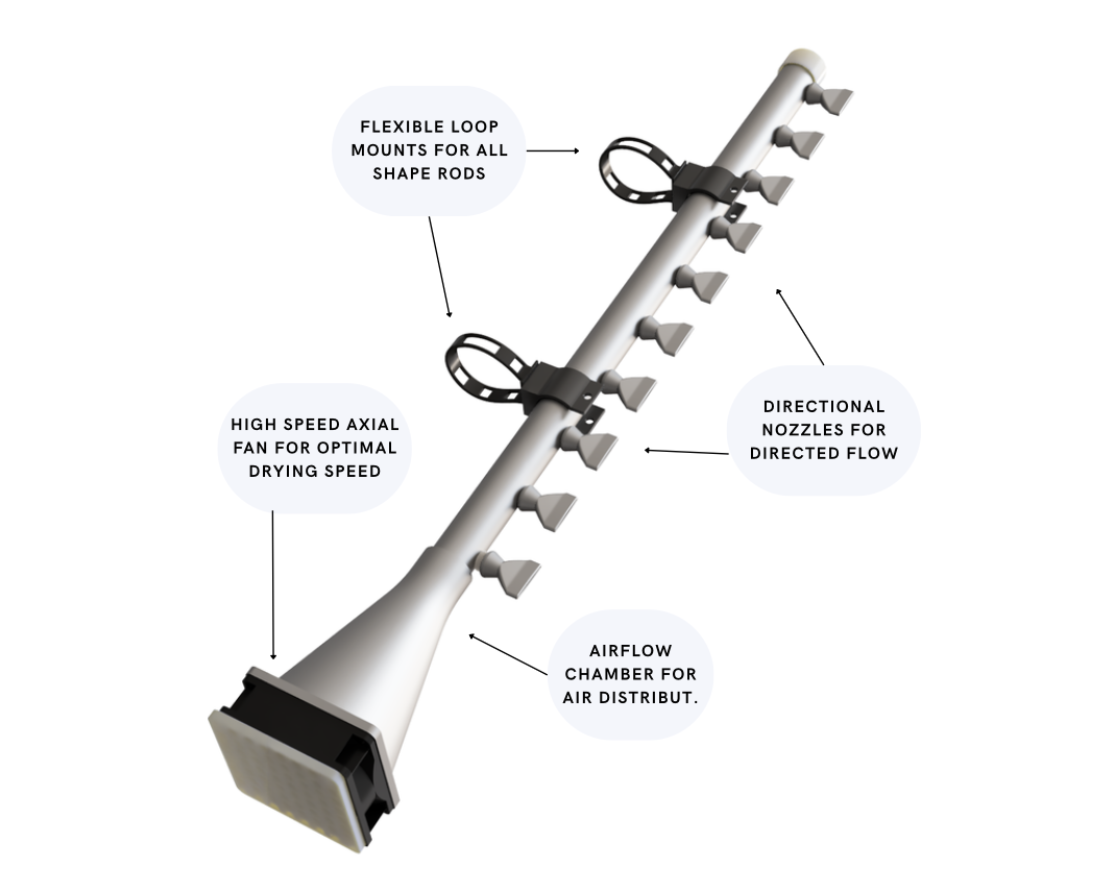
Boosted fan CFM, added directional nozzles in place of open holes, kept the core tube geometry. Five rapid-prototyped configurations tested experimentally for outlet airflow efficiency and drying time before settling on the final design.
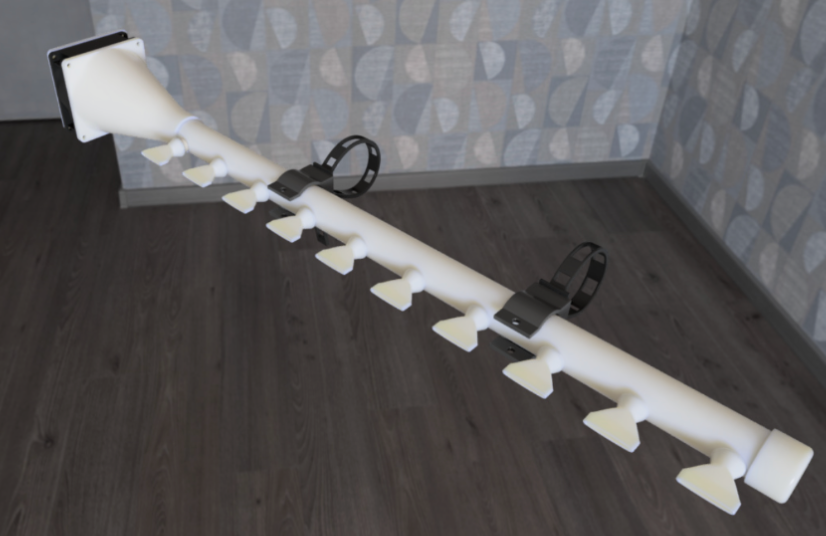
The biggest design failure to fix between V1 and V2 was the open-hole outlet. Eight bare 1/4-inch holes drilled into PVC pipe let air escape, but with no control over direction or velocity, most of that airflow never reached the clothes it needed to dry. Replacing the holes with directional nozzles, combined with a higher-output fan, was the single change that took the device from "moves air" to "dries clothes in a useful amount of time."
Each of the five V2 configurations varied nozzle count, spacing, and fan placement. I rapid-prototyped and tested all five experimentally for outlet airflow efficiency and drying time before the team converged on the final geometry, the one later validated in ANSYS Fluent.
| Fan | DC centrifugal, boosted CFM (V2) |
| Body | Schedule-40 PVC, 3/4″ profile |
| Outlets | Directional nozzles (V2), 8 ports |
| Mounting | Closet rod clamps, universal fit |
| CAD | Fusion360 |
| Simulation | ANSYS Fluent, internal flow |
| Prototype iterations | 3 generations, 5 V2 configurations tested |
| Validation | >90% accuracy vs. hand-calculated outlet velocity |
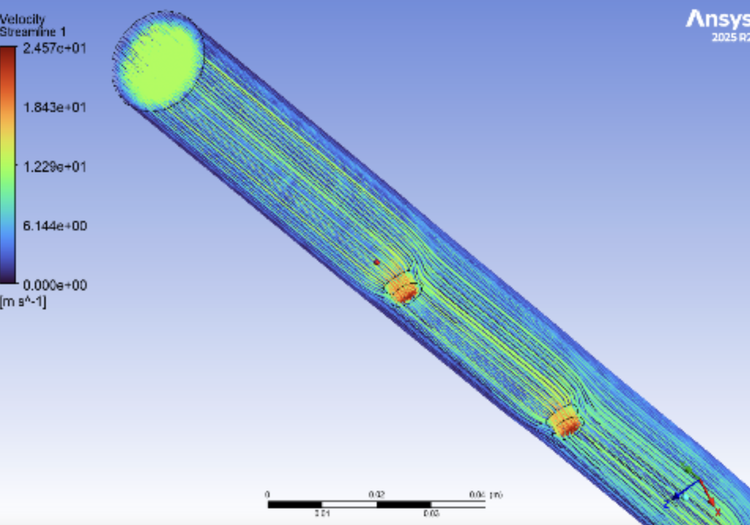
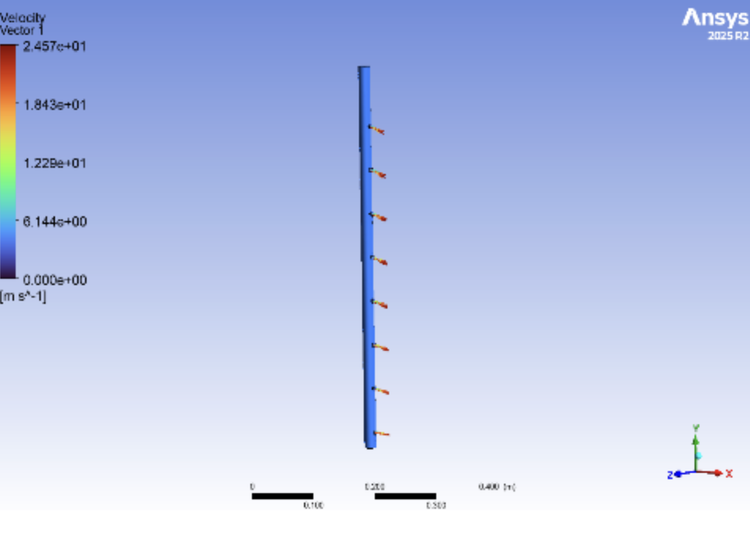
Full velocity streamlines through the air chamber, ANSYS Fluent
Simulation
I built a rudimentary CFD fluid model to visualize airflow through the device's internal chamber, both to confirm preliminary efficacy and to catch design issues before committing to a final geometry. Internal fluid geometry was modeled in Fusion360 from the V2 prototype, and boundary conditions were pulled from the actual fan datasheet on DigiKey rather than assumed values.
ANSYS Fluent computed exit velocities across each outlet, plus full and inlet velocity streamlines through the chamber. Comparing that output against hand-calculated outlet velocity gave us a validation check: the simulation confirmed our hand calculations to within 90% accuracy, which was enough confidence to treat the V2 geometry as final rather than running another prototyping pass.
Before any prototype existed, the team ran customer discovery across the Cornell student body: 150+ empathy fieldwork data points collected through interviews and immersion sessions about daily routines, not just laundry specifically. I personally conducted more than 10 of those interviews, surveying students directly about pain points in their day-to-day campus experience.
That fieldwork is what surfaced laundry drying as the problem worth solving, and it's also what grounded the 8 major product requirements and 10 engineering constraints I later translated into TRIZ-driven design decisions. A device built without that grounding might have solved an interesting engineering problem; this one had to solve a problem students actually said they had.
Validation ran on two tracks. Experimentally, five rapid-prototyped V2 configurations were tested for outlet airflow efficiency and drying time to converge on a final nozzle and fan layout. Computationally, that final geometry was modeled in ANSYS Fluent and checked against hand-calculated outlet velocity using boundary conditions pulled from the real fan's datasheet, not assumed values.
The course's final deliverable was a presentation to a panel of industry specialists evaluating start-up potential, not just a grade from course staff. That meant the engineering work had to be packaged into something investors could actually evaluate: a working device, a validated simulation, and a clear case for why the problem mattered.
I assembled the research poster and the high-quality renderings used in that presentation and in every later investor-facing material. The renderings weren't just for show, they were built from the same Fusion360 geometry used in the ANSYS Fluent model, so what investors saw matched what had actually been simulated and tested, not a separate concept piece.
The full case, customer discovery, TRIZ-driven iteration, simulation validation, and presentation materials, is documented in the team's final report and research poster below.
Project Documents