← Back to Projects

Anti-Kink Coil for Synthetic Vascular Grafts

Cornell University Biofoundry Lab  ·  Anova Biomedical Inc.

I designed and validated a PET anti-kink coil system for synthetic vascular grafts and developed the automated manufacturing workflow used to fabricate and characterize multiple coil variants, in collaboration with Anova Biomedical Inc. and Dr. Yadong Wang's lab at Cornell.
3D Modeling FEA Design Optimization ANSYS Fluent Automated Manufacturing ISO Standards Root Cause Analysis Materials Technical Documentation

Situation

  • Anova Biomedical Inc. and Dr. Yadong Wang's lab required manufacturing technology and preliminary models for a novel anti-kink coil designed to improve patency of synthetic vascular grafts.
  • No established automated process existed for producing the coil geometry with sufficient consistency and repeatability for design validation against ANSI 7198-2001 requirements.
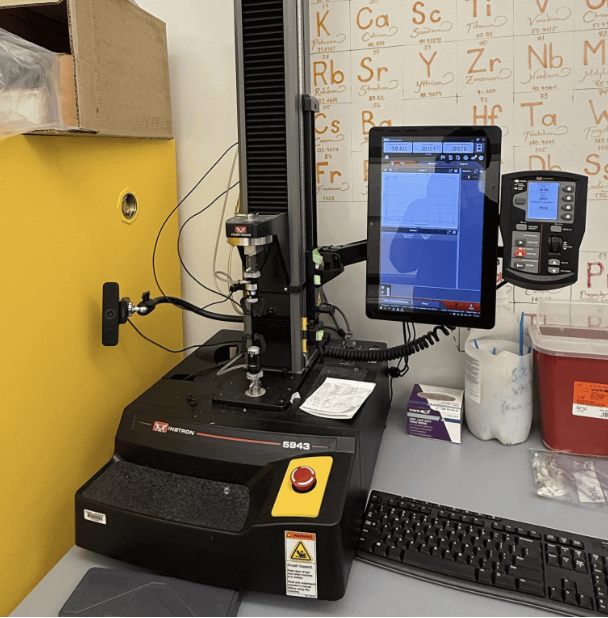
  • Pre-sourced equipment including plastic extruders required integration and customization before the process could be operated reliably at lab scale.

Outcomes

  • Designed and standardized a PET anti-kink coil system for synthetic vascular grafts, with geometry validated through FEA-guided design optimization to meet ANSI 7198-2001 requirements.
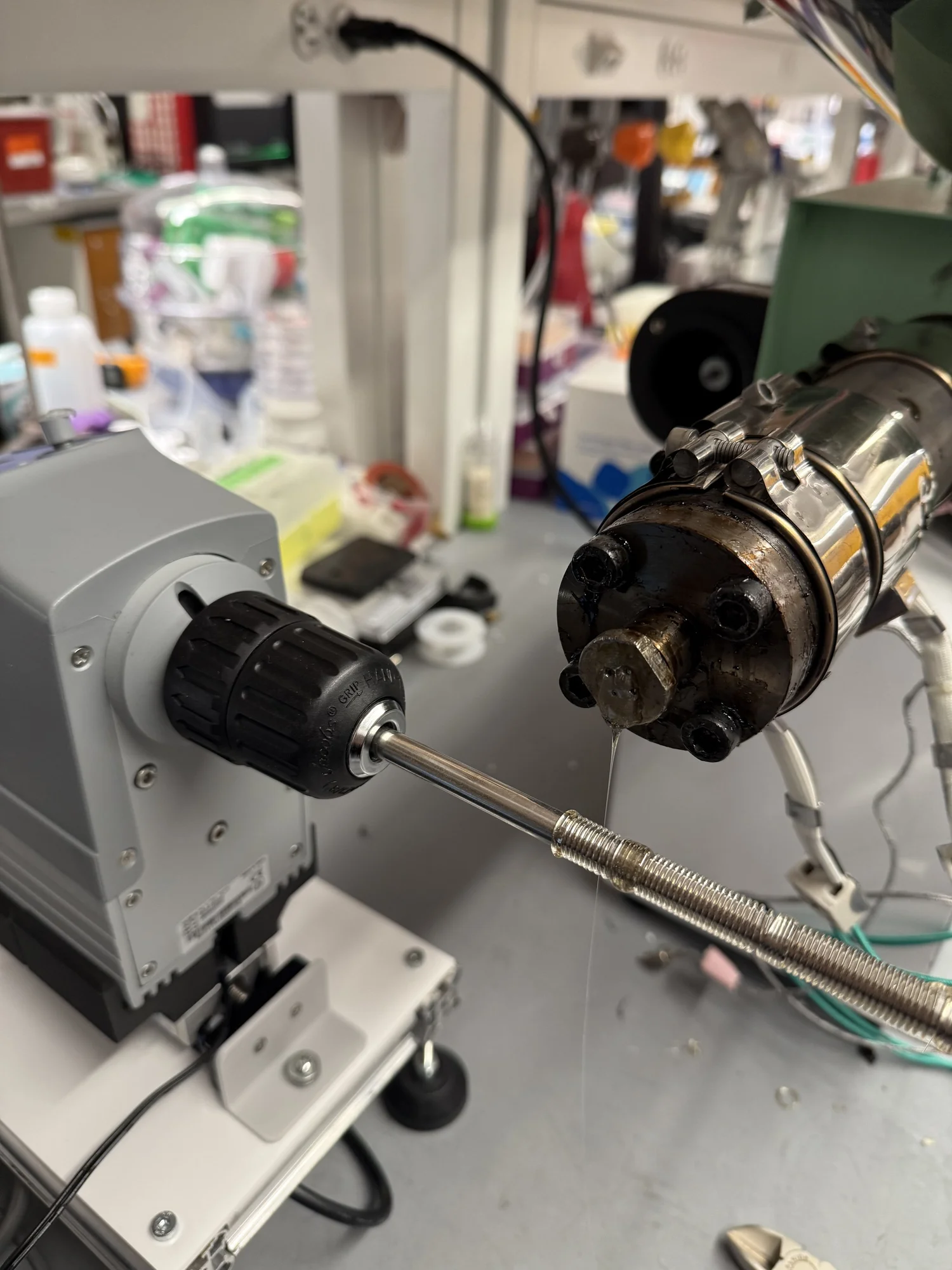
  • Developed an automated manufacturing workflow by integrating a motorized linear stage, mandrel spinner, and extruder into a repeatable, software-controlled fabrication process.
  • Fabricated and validated 12 anti-kink coils across multiple design variants, characterizing kink resistance and mechanical strength.
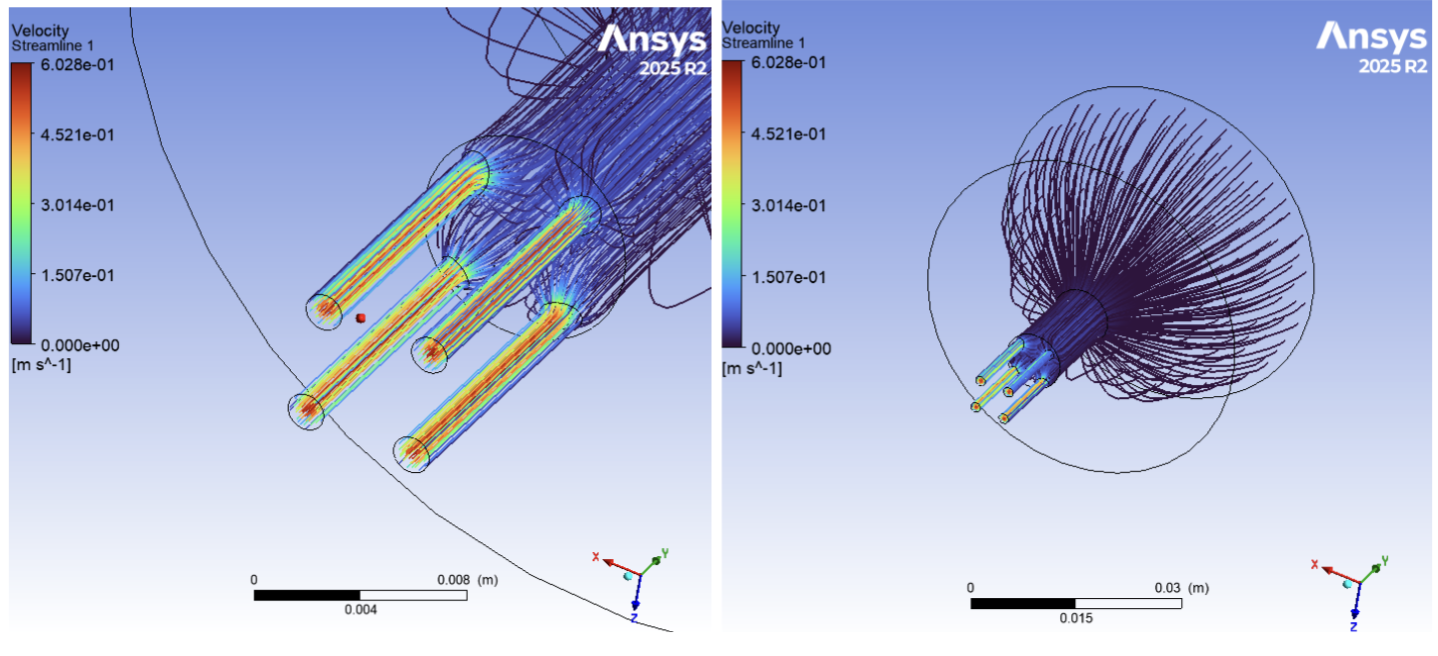
  • Produced 20+ pages of engineering documentation covering performance metrics, ANSI 7198-2001 compliance, and ANSYS Fluent analysis of extruder head flow.

The Problem

Synthetic vascular grafts are prone to kinking when implanted in locations where the vessel undergoes bending or compression during normal patient movement. Kinking restricts blood flow, reduces graft patency, and in severe cases can lead to thrombosis or graft failure. An anti-kink coil bonded to the exterior of the graft provides mechanical support that prevents this collapse while preserving flexibility and compliance.

The core engineering challenge was not just the coil design itself, but establishing a manufacturing process capable of producing coils with sufficient geometric consistency to support systematic design evaluation. The production method needed to be controllable, repeatable, and adaptable to different coil geometries, which required custom integration of multiple pieces of equipment into a single automated workflow.

Documentation limited due to confidentiality. This project was conducted in partnership with Anova Biomedical Inc. and involves proprietary design information. Specific coil geometry, manufacturing parameters, material specifications, and performance data are not disclosed here. The project is available for discussion in a professional context on request.